Khatiyan is the form of Record of Rights most people recognise in Bihar. It is prepared in the context of a land survey and may list the recorded raiyat, khata, khasra, area, land class, rent, and related remarks. When people say that a name appears in khatiyan, they are usually referring to a right or interest recorded during that survey period.
> Image placement—directly below this paragraph: Create an original illustration of an old survey register, a Bihar outline, and a magnifying glass over khata-khasra entries. Alt text: Khatiyan Bihar land record guide.
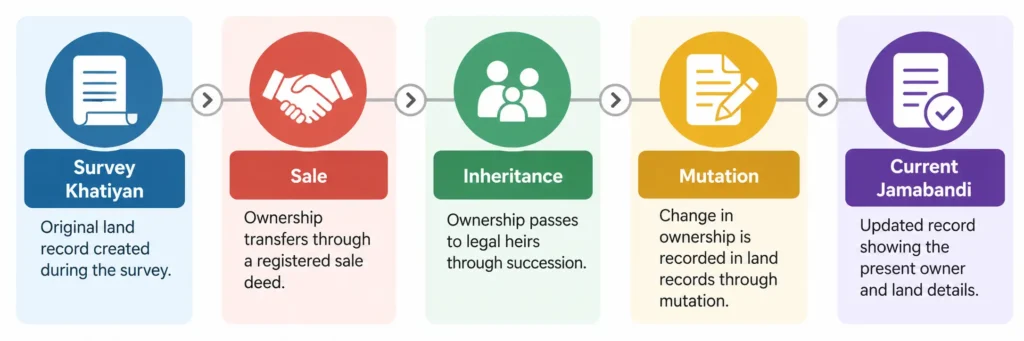
A khatiyan is historically important, but its date matters. Land may have been sold, inherited, partitioned, acquired, or mutated after the survey. A sound review begins with khatiyan and follows every later document to the present Jamabandi.
Main types of khatiyan in Bihar
CS Khatiyan
CS generally refers to the Cadastral Survey record. It is often the older base record used to identify the original khata, plot, and recorded rights for that survey.
RS Khatiyan
RS refers to a Revisional Survey record. Where a revisional survey was conducted, records were prepared again with reference to the position and rights examined during that later survey. CS and RS plot numbers do not always match.
Special Survey Record
Special survey work can produce a later record and map framework. Its publication stage matters because draft, objection, and final records may not carry the same status.

Details to verify in a khatiyan
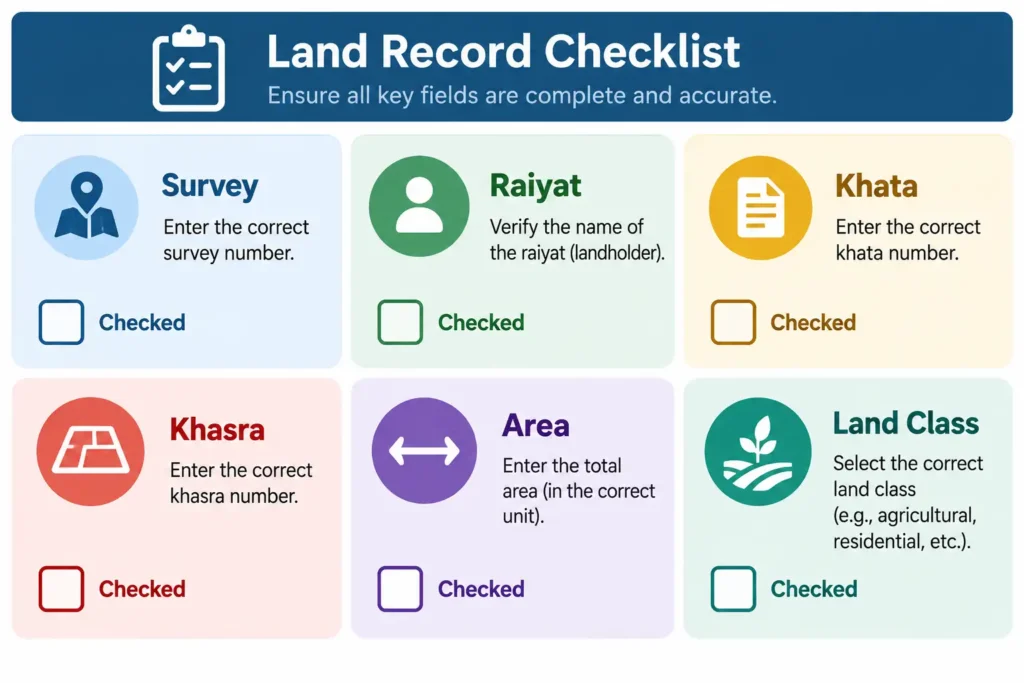
Check the survey and publication details first. Then review the raiyat’s name, khata number, each khasra number, recorded area, land classification, rent entry, and remarks. If the document uses an old script or is partly unreadable, obtain a clearer copy rather than guessing.
The total area under a khata does not tell you which plot is being purchased. Match each khasra and its area separately with the deed schedule, map, and current revenue entry.
How to search Khatiyan Bihar
- Identify whether you need CS, RS, special survey, or another record.
- Keep district, circle, mauza, thana number, khata, and khasra details ready.
- Open the relevant official land-record or scanned-record service from Bihar Bhumi or the department website.
- Choose the available survey and location filters.
- Open the complete record page rather than relying on a cropped preview.
- Save the copy for comparison and obtain a certified or digitally signed version when required.
- If the record is not available online, ask the circle office, record room, or survey office about inspection and copy procedures.
Difference between khata and khasra
A khata is an account under which one or more plots may be recorded. A khasra identifies an individual plot within a mauza and survey context. Finding the right khata does not prove that the khasra being purchased is correct. Every plot number and area in the deed should be checked separately.
Khatiyan versus Jamabandi
Khatiyan reflects the relevant survey period. Jamabandi is a continuing revenue account that may change after approved mutation. It can be perfectly normal for an ancestor to appear in khatiyan and an heir to appear in current Jamabandi—provided the succession and mutation chain explains the change.
Role of khatiyan in a land purchase
Use khatiyan to trace the survey identity and historical root, not as the only purchase document. Compare it with the cadastral map, deed chain, mutation orders, current Jamabandi, possession, access, and encumbrance information. A complicated chain deserves professional title verification.
| View RoR | Click Here |
| Jamabandi Panji | Click Here |
What is Khatiyan Bihar?
It is a survey-based Record of Rights that may contain the recorded raiyat, khata, khasra, area, land class, rent, and other remarks.
What is the difference between CS and RS khatiyan?
CS is associated with the cadastral survey, while RS is associated with a later revisional survey. Plot and khata numbers may differ between them.
Is khatiyan proof of the current owner?
Not by itself. It reflects a survey period, so later sale, inheritance, partition, acquisition, and mutation records must also be examined.
Are khata and khasra the same?
No. A khata is an account that may include several plots, while a khasra is the identifier of an individual plot within a survey and mauza.
What if Khatiyan Bihar is not available online?
Contact the relevant circle office, district record room, or survey office to ask about inspection and certified-copy procedures.
Can Parimarjan Plus correct every khatiyan error?
No. The correct remedy depends on whether the issue is digitisation, survey publication, mutation, or disputed ownership.
बिहार भूमि की महत्वपूर्ण आधिकारिक सेवाएं
बिहार सरकार की भूमि एवं राजस्व सेवाओं के आधिकारिक लिंक एक ही जगह